Educating and Educational: the ESA Teachers’ Summer Workshop

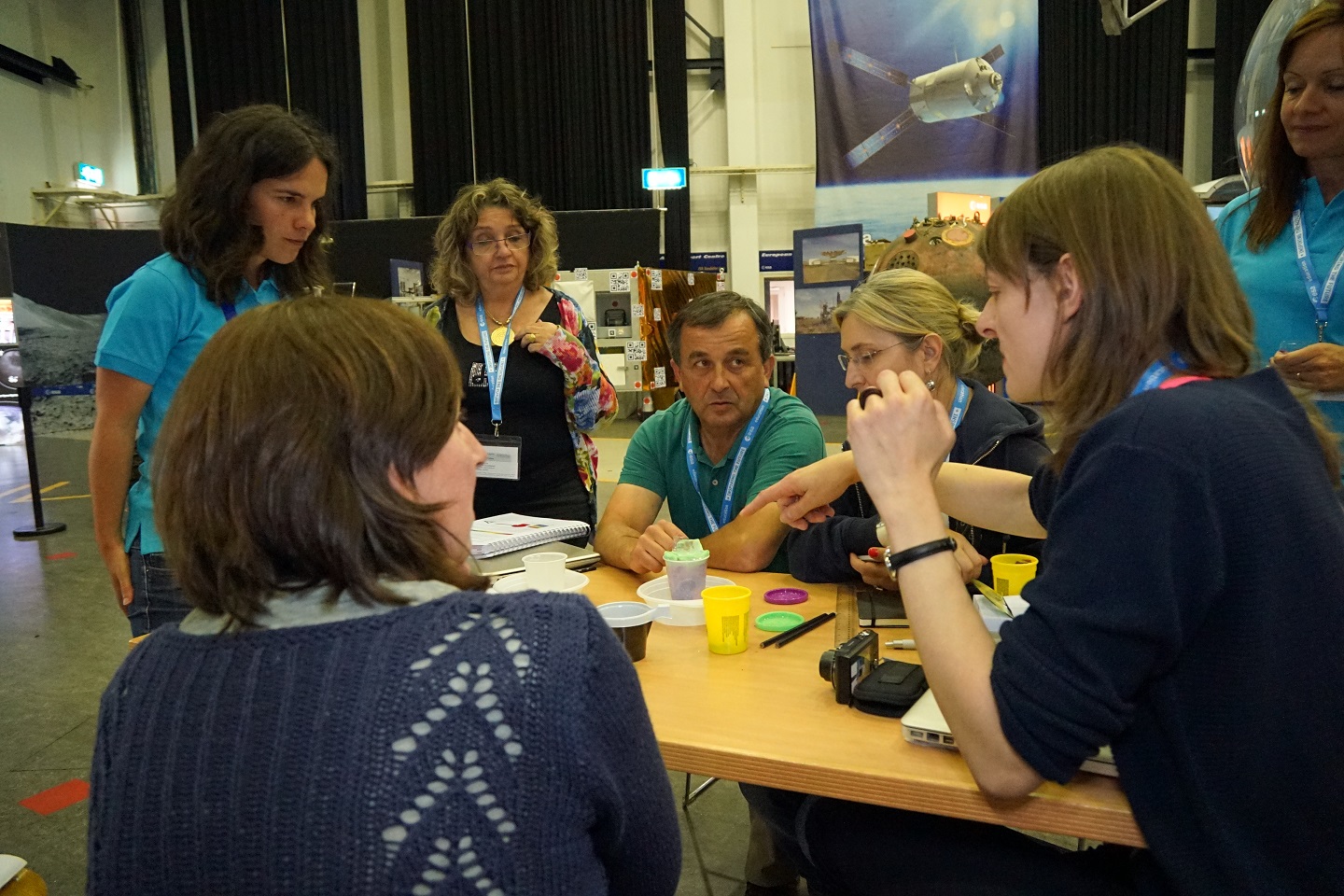
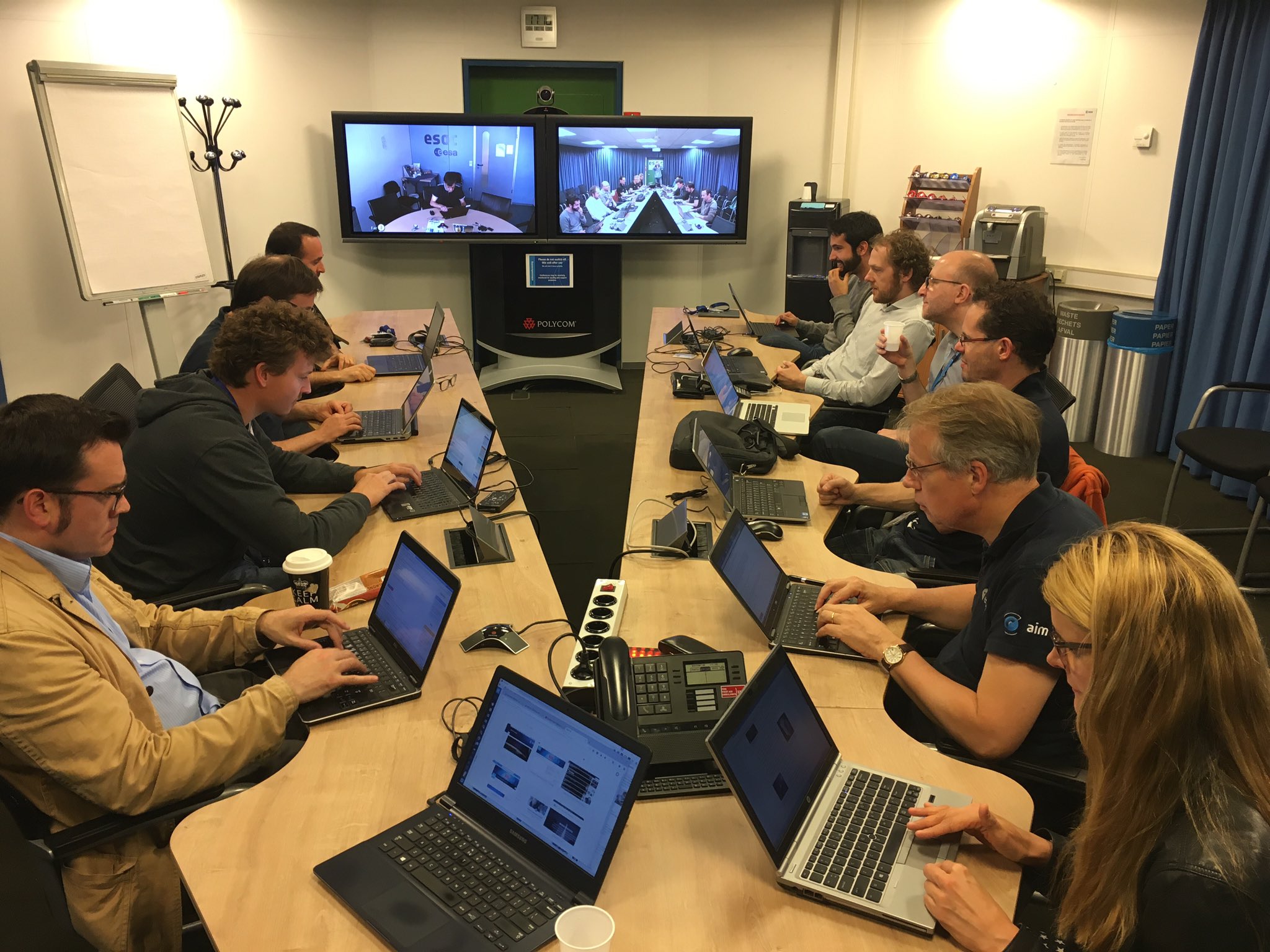
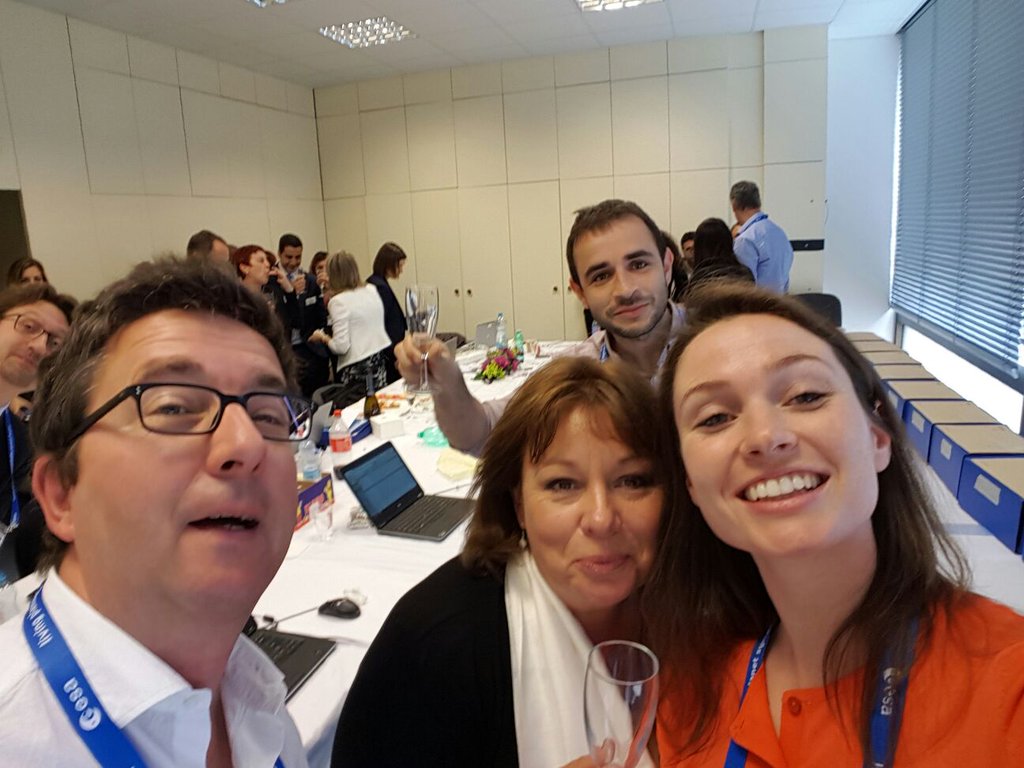
Every summer, ESA’s Education Office organizes a workshop for teachers from across Europe.  This year the workshop took place from 6 to 8 July at the European Space Research and Technology Centre (ESTEC), the Netherlands. Up to 70 teachers, both primary and secondary level, had the opportunity to do hands-on activities developed by the ESA Education Office and European Space Education Research Office (ESERO) national offices, attend lectures from top-level space experts, as well as get to know the daily life routine in the International Space Station as experienced by ESA astronaut Leopold Eyharts. As members of the ESA Education team, my fellow EJR-Quartz for ESA colleagues Anca Zinculescu, Karina de Castris, and myself thoroughly enjoyed helping to plan and execute this unique event.

As Science didactics expert, I helped develop the educational resources to be presented during the workshop. Working with ESA Kids editor Karina, we curated different teachers’ resources to identify what worked, translated these into English to make them readily available to all, and added info related to ESA and its missions. Our colleague Anca (Web and graphics designer) created the illustrations for the resources as well as the presentation templates.

During the three-day workshop, we presented workshops on different topics to primary- and secondary-level teachers as well as led the hands-on activities. Throughout the event, Anca published web articles and covered the workshop on social media (#ESATeach2016).

While helping to inspire teachers and to demonstrate how space can be used for teaching and learning STEM (Sciences, Technology, Engineering and Mathematics) subjects, we also had the chance to learn more about different space topics and to become familiar with amazing educational tools. This workshop was also a unique opportunity to connect directly with teachers from all over Europe. We look forward to next year’s Teachers’ Workshop!

Say goodbye to Philae

12 November 2014 – a remarkable day for humankind.  For the first time ever, we landed a robot on the surface of a comet. The robot lander Philae touched down on the surface of Comet 67P/Churyumov-Gerasimenko at 17:09 CET, having travelled 6.4 billion kilometres in 10 years as a passenger aboard ESA’s Rosetta comet chaser. Yesterday, on 27 July 2016, the Electrical Support System (ESS) on the European Rosetta spacecraft, which is used to communicate with Philae, was switched off to save energy until 30 September, the day the Rosetta mission will come to an end.


philae tweet

Philae’s tweet upon landing on comet 67P reached millions of people.

The robot lander Philae didn’t just land on a comet, he also told the world about it as he did it – another first! With a little help from EJR-Quartz for DLR, he reported the landing, step by step, in real time as @Philae2014, making the world a part of his mission. His landing tweet “Touchdown! My new address: 67P” reached millions of people.

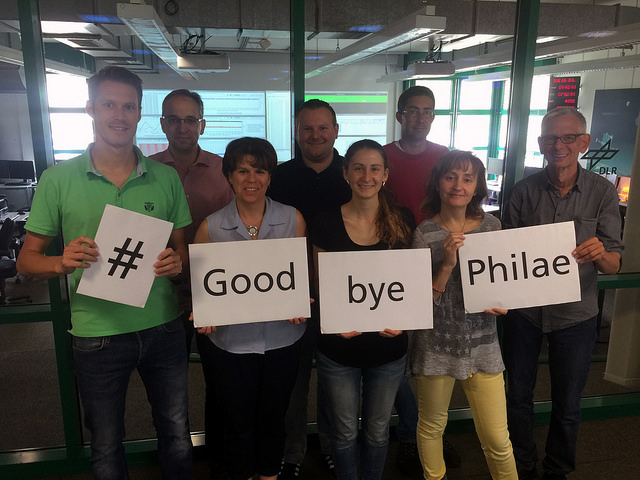
This little robot made his way into the hearts of many – but the time has come to say #GoodbyePhilae.

We are supporting the German Aerospace Center (DLR) in a campaign that invites the world to say farewell to the lander. Participating is very easy! You can find out how to say goodbye to the first ever robot to land on a comet here.

Follow along on social media:

Twitter: @Philae2014 – @DLR_en – @DLR_de

DLR Facebook (German)

DLR Facebook (English)

DLR Instagram

DLR Flickr


Asteroid Day and Beyond

The largest asteroid impact on Earth in recent history occurred on 30 June 1908, in Tunguska, Siberia. The mid-air explosion flattened some 2,000 square kilometres of forest. Fast forward to 30 June 2015: Asteroid Day is launched by Grig Richters, German filmmaker, and Brian May, former Queen guitarist and astrophysicist, to raise awareness about asteroids and their potential danger.

Held on 30 June to commemorate the Tunguska event, Asteroid Day is a global awareness campaign aimed at educating the public on asteroids as well as how to protect the Earth in the event of a threat. Participating organizations are encouraged to host their asteroid-themed events locally as well as engage with the public online. This year, the European Space Agency participated in Asteroid Day. As ESA prepares to submit its candidate Asteroid Impact Mission (AIM) to the Ministerial Council for approval later in the year, Asteroid Day was the perfect opportunity to promote this and EJR-Quartz editors supported the campaign in a number of ways.

Scientific editor Linda Carrette supported the ESA AIM team in coordinating the creation of two unique multimedia tools to be released for Asteroid Day – an interactive, fun, mobile phone game, and a full-dome video of the AIM mission to be shown at participating Planetariums. At the European Space Research and Technology Centre (ESTEC) in Noordwijk, the Netherlands, Linda helped to set up an AIM stand for Asteroid Day.

Meanwhile, Technology editor Sean Blair worked on a number of special features for Asteroid Day, highlighting AIM and ESA’s Space Situational Awareness Programme. Sean also hosted a Facebook LIVE session featuring a demonstration of the physical asteroid model being used for the mission’s camera assessment. He was also among the group of ESA scientists, engineers, and communication officers that participated in the popular Reddit “Ask Me Anything” thread.

Chief social media publisher Maria Bennett was responsible for planning and coordinating ESA social media for Asteroid Day, liaising with the Asteroid Day founders.

It was an exciting day for all. While helping to promote asteroid awareness through ESA activities – where “every day is Asteroid Day” – our editors learned quite a bit themselves about the virtual organisation of Asteroid Day and reaching a mass audience through various media partners and influencers.

ECMWF Copernicus

ECMWF, based in Reading, UK, is an independent intergovernmental research institute and operational service that provides numerical weather predictions to its Member States. ECMWF has been appointed by the European Commission to implement the Copernicus Climate Change and Atmosphere Monitoring Services, under the EU’s flagship Earth-observation programme Copernicus.

From January 2017, EJR-Quartz is assisting the ECMWF Copernicus Services communication team achieve their goals of reporting scientific information and complex data findings to the wider community of scientists, policy makers, industry, SMEs, and the media. We are collaborating with the Copernicus communication team at ECMWF to help increase the visibility of the Copernicus Services programme and the important research it undertakes.


Earth Observation Mission and Explorer Calls

EOPUS EO mission

ESA’s Earth Observation directorate announces calls for advisory group membership as well as mission proposals via two dedicated websites that EJR-Quartz has developed:

The Earth Observation Advisory Group website announces calls for membership and allows scientists to register and move through the application process.

The Earth Observation Proposal Upload System allows scientists to upload ideas and proposals for new Earth Observation missions.

What we do:

  • We developed and maintain the websites, including their backend tools such as the submissions manager, which greatly simplifies and expedites the application process.

Related links

Earth Observation Advisory Groups

Earth Observation Proposal Upload System (EOPUS)

Past projects

DexROV

We were the communication and dissemination partner for DexROV, a project to make underwater operations easier and more flexible through the development of cost-effective, remotely-operated-vehicles (ROVs). DexROV (Effective Dexterous ROV Operations in Presence of Communications Latencies) was a project funded under the European Union’s Horizon 2020 Research and Innovation programme.

Launched from January 2015, DexROV was implemented over 3.5 years and drew on expertise from a consortium of seven partners across six European countries. Our role as consortium member was to maximise the visibility and impact of the project through cross-media communication and dissemination activities.

What we did:

  • We coordinated the design of DexROV graphics, including logo, website, business cards and more, while commissioning the project’s graphics, animations, and videos.
  • We set up and maintained the DexROV website, writing and publishing the latest news articles, highlights, and event recaps as well as project milestones. We also created the DexROV Newsletter.
  • We managed DexROV social media channels (Twitter and YouTube).

Related links:


ESA Education

Prior to our ESA CSP contract, EJR-Quartz worked on the ESA Education portal, a resource for educators and students. The ‘ESA Kids’ site, launched in December 2004, provides news, info and all kinds of activities for younger visitors, available in 6 languages.

What we did:

  • We maintained the ESA Education portal and provided editorial and graphical services.
  • We managed the ESA Kids website, creating content in 6 different languages.
  • We also helped Paxi, the ESA Kids’ mascot, with his social media campaign.
  • We commissioned animation and graphics, working with freelance writers and video sub-contractors to come up with engaging multimedia for Paxi and other projects and missions. More info on multimedia can be found here.
  • For the Teachers Resources, a division of ESA Education, our didactics expert provided scientific content for ESA’s STEM curriculum in the form of activities and experiments to incorporate in the classroom.

Related links:


IAF

EJR-Quartz supplied the editorial services for the International Astronautical Federations’s (IAF) to develop their new web portal launched in 2006.

The IAF is a non-profit making organisation created to provide a focal point among organisations and industries worldwide dealing with space. EJR-Quartz supported the IAF in creating a new portal that provides a truly global and impartial view of space, presenting the activities of the IAF and strengthening its role as a focal point.

Launched in June 2006, the portal is intended primarily as a one-stop shop for networking in the space arena, both for those already in the business and for students considering careers in space.

In January 2006 EJR-Quartz won the contract for editorial support for the IAF portal, in open competition. This work included repurposing existing content, creating new content and populating the new content management system, prior to launch. Post-launch EJR-Quartz was responsible for proactive editorial maintenance of the site until 2008 when a staff editor was appointed.

As part of its continuing support of the IAF website, EJR-Quartz was responsible for a minisite dedicated to the 57th International Astronautical Congress held in Valencia, Spain in October 2006. EJR-Quartz covered many activities from Plenary Sessions to Highlight Lectures and Late Breaking News sessions during the five day Congress. Web articles, with a vary rapid turnaround, were produced for every public event. EJR-Quartz was also responsible for illustrating the various activities with images, producing daily reports in both text and audio format and also adding video content to the site.

Related links:


International Institute of Space Law

EJR-Quartz provided the turn-key development of a website for the International Institute of Space Law (IISL) and its subsequent maintenance. The IISL was founded by the International Astronautical Federation and deals with all aspects of the rapidly expanding field of space law, such as national and international law governing activites in outer space.

EJR-Quartz designed the site, its layout and information architecture, provided the content management system and other software, and implemented it.

The existing content was repurposed, new content written and the site was populated. EJR-Quartz provided proactive editorial maintence.

Related links:


UNESCO

EJR-Quartz assisted in the design and development of a website for UNESCO’s Underwater Cultural Heritage section.

The site is intended to raise public awareness of our underwater cultural heritage and the urgent need to protect and preserve it. Its purpose is to inform the public and young people of the role of UNESCO’s Underwater Cultural Heritage and the importance of the Convention on the Protection of the Underwater Cultural Heritage.

The project was carried out in collaboration with art director Sabrina Schmidt of Nuvolario.com.

Related links:


EETFI

EETFI

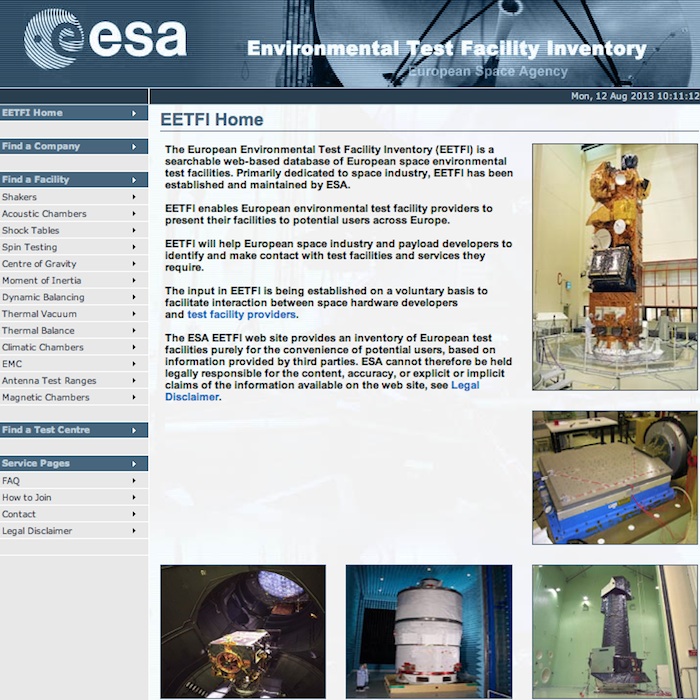
EETFI, or European Environmental Test Facility Inventory (EETFI) for ESA test centre, was a searchable web-based database of European space environmental test facilities, built and maintained for ESA by EJR-Quartz. Its use wasfree and it was visible to the general public. As well as presenting the facilities of the ESTEC Test Centre, EETFI facilitated contacts between test facility providers and potential users and increased their client base.

The ESTEC Test Centre is one of the four major test centres in Europe for the verification of spacecraft at system level, the others being Industrieanlagen-Betriebsgesellschaft (IABG), INTESPACE (ITS), and the Alcatel Test Centre in Cannes. In general there is good visibility for these large test centres, and also for the Centre Spatial de Liège (CSL) centre of excellence for optics testing.

However, visibility for smaller facility providers is less evident. In fact there have been requests from space hardware developers, and Agency Member States delegates to facilitate the interaction between facility providers and potential users addressing both large system test centres and also smaller facilities for subsystem tests.

In response to the above, the European Environmental Test Facility Inventory (EETFI) was established, to assist space hardware developers in identifying suitable European test facilities. It was intended that EETFI will include all companies and organisations from all ESA Member States active in space environmental testing, listing their respective facilities and main technical features.

Related links:
EJR-Quartz at NASA Open House: Up Close with Orion

Julien

To celebrate 75 years in operation, the NASA Glenn Research Center hosted an Open House at its Plum Brook Station facility in Sandusky, Ohio, USA. The public was welcomed on 11-12 June 2016 for a weekend of activities and exhibits as well as special tours of its facilities, including the Space Power Facility, the world’s largest vacuum chamber for testing parts of rockets, landers, and space station components.

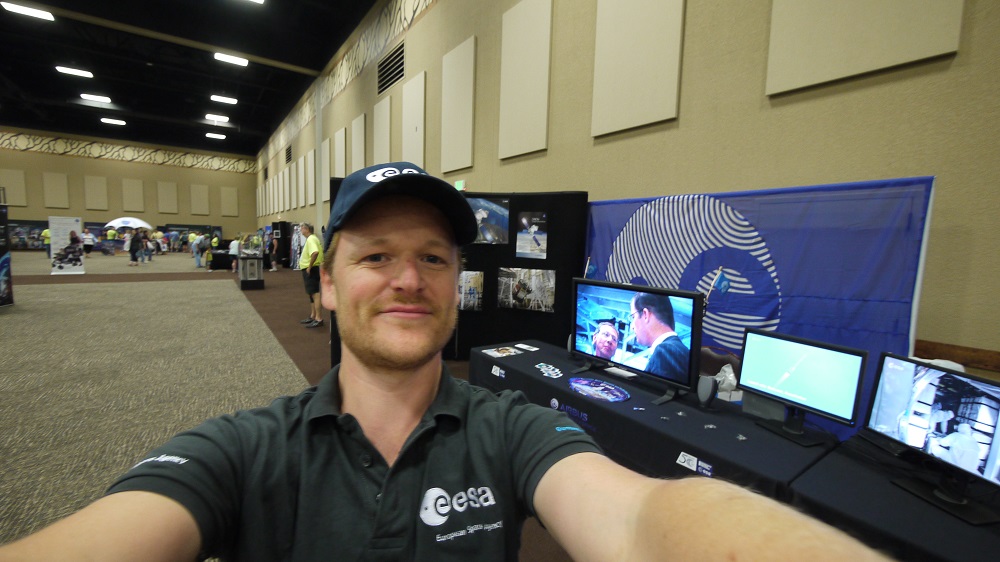
Julien Harrod, Human Spaceflight and Operations editor, EJR-Quartz for ESA, was invited to cover the event from the ESA perspective. In coordination with the Human Spaceflight team, Julien designed posters for ESA’s stand at the Open House, which also featured informational brochures and video clips. Throughout the weekend, Julien manned the ESA stand, engaging with visitors – a majority of them families –  about ESA programmes and missions.

Julien was also treated to a tour of the testing facilities. Currently under testing at the Space Power Facility is NASA’s new Orion spacecraft, for which ESA is constructing the service module that will provide the spacecraft’s power and propulsion. Julien was able to get up close to the module, taking photos that later served as Human Spaceflight and Operations Image of the Week, recording establishment shots, and conducting an interview for future Human Spaceflight videos. Read his feature article on Orion here.

In addition to communicating ESA’s work to the American public, the Open House also gave Julien the opportunity to network with colleagues in the field. Julien connected with fellow ESA colleagues currently based at Plum Brook Station for the Orion service module testing period and met his NASA Glenn Center counterparts for fruitful discussions on science communication and public engagement in the space sector.

Living Planet 2016: EJR-Quartz at the largest Earth Observation conference

The European Space Agency’s Living Planet Symposium is not to be missed. This triennial event brings together over 3,000 participants presenting scientific findings based on satellite data.

This year Living Planet was held in Prague on 9-13 May with EJR-Quartz’s Earth observation editors Honora Rider (of ESTEC) and Kelsea Brennan-Wessels (of ESRIN) on site writing, publishing, filming, and tweeting the latest in EO results.

With an event on this scale, preparation is key. Our editors assisted by preparing hard-copy brochures for the event that included display copy, panel outlines, and other promotional material. On site in Prague, Honora and Kelsea set up camp in the organiser’s office and quickly got to work. In addition to attending sessions, they wrote and published daily web articles and images based on key scientific findings presented at the Symposium.

Our ‘EO gal’ Kelsea also conducted daily video interviews with leading Earth observations scientists in attendance. Both ladies also manned the Tweet decks to provide Twitter coverage throughout the week-long event.

Aside from all the fascinating presentations on the latest results from Earth-observing satellites and remote sensing techniques, the Symposium was a wonderful opportunity for our editors to connect with the EO community and to network with new researchers for future Earth observation features.

Honora and Kelsea did a wonderful job covering the largest Earth observation conference in the world and had a great time doing it. We look forward to the next Living Planet Symposium!

EJR-Quartz at ILA Berlin Air Show 2016

Karin & Alejandro at Otto Lillienthal photo stand

EJR-Quartz’s Karin Ranero Celius, lead English Editor for the German Aerospace Centre (DLR), and photographer Alejandro Morellon Acosta attended the 2016 ILA Berlin Air Show held on 1-4 June. In the run up to ILA, EJR-Quartz translated, edited, and created texts for DLR exhibits and stand guides, as well as other promotional material. We also produced the English-language special ILA issue of the DLR Magazine for distribution at the Air Show.

During the event, EJR-Quartz was on-site providing further editorial and communications support. Alongside German DLR colleagues, we produced English-language digital content for social media (@DLR_en, DLR Facebook, Google +, and Flickr) and translated, edited and published German press releases, with support from headquarters in Leiden. We also documented DLR’s presence at ILA through photos and captions posted to Twitter and Flickr and provided additional communication support as needed.

Many important collaborations were signed and sealed during ILA, most notably DLR’s extended collaboration with NASA to run the Stratospheric Observatory for Infrared Astronomy (SOFIA). The joint venture was renewed at ILA, with administrators of both agencies present to celebrate the partnership. Our quick, live coverage of the signing resulted in huge international response to the news.

EJR-Quartz is honoured to have been a part of DLR’s success at ILA 2016, and we look forward to attending the next Berlin Air Show in 2018.

Rome Race for the Cure

On Sunday 15 May four of us took part in the 17th annual Race for the Cure charity walk in Rome on. The ‘Space Racers’ completed the 5km walk in 1 hour 40 minutes – which wasn’t bad considering the incredible number of people trying to get over the starting line. More than 65,000 people took part in the race, as well as an additional 5000 ‘Ladies in Pink’ breast cancer survivors.

Men, women and children all took part in the race, including the youngest member of our own team, six month old Nina! The charity walk took participants through many of the famous monuments in Rome, starting at Circo Massimo, passing Piazza Venezia, the Fori Imperiali and the Colosseum, before finishing back at Circo Massimo.

Race for the Cure is not just about curing breast cancer, but also about raising awareness and prevention: free check-ups were given to women at the ‘Women’s Health Village’ throughout the three-day event including mammograms, ultrasounds, scans and consultations.


EJR-Quartz sponsors ESA Football tournament

We were a proud sponsor at the annual European Space Agency (ESA) Football tournament in May.

This year’s tournament took place at ESTEC, the event was organised by ESA staff at ESTEC. As in previous years, EJR-Quartz srl sponsored the ESRIN team and our flag was on display during the matches, alongside the flags of our fellow sponsors.

The weekend of sport had blue skies and warm weather, as each ESA team played in the mini championship. ESOC’s men’s team and ESAC’s women’s team took home the winning trophies, with ESRIN and ESOC coming up in close second place.

As with every year, the tournament was a great opportunity for ESA friends and colleagues located across the continent to meet. We are happy we got to play a part in this wonderful event and look forward to the chance to support it again in the future!

Behind the scenes of the Rosetta communication campaign

The March 2016 issue of the Communicating Astronomy with the Public journal (CAPj) is a special issue featuring articles about the communication campaign for ESA’s Rosetta mission.

Writers and editors from EJR-Quartz, who have been deeply involved in many aspects of the campaign, welcomed the opportunity to share their experience with other science communicators.

“We had been approached many times by people working in communication and outreach, asking us about various aspects of the campaign, and it became clear that there was quite some interest in hearing about our experiences with different aspects of the Rosetta campaign,”

says Karen O’Flaherty, Chief Editor for ESA’s Science & Technology and Robotic Exploration of Mars websites, and one of EQ’s editors working on the campaign.

“We were delighted when CAPj agreed to support a dedicated issue, and many thanks are due to CAPj’s Editor-in-Chief, Georgia Bladon, and the team at the journal for producing this great issue, as well as to all of the authors who contributed to this special issue.”

This special issue of CAPj features articles about the strategy adopted for the communication campaign, the development and impact of the cartoon series, insights into the role played by social media, lessons learnt from running competitions, and the behind-the-scenes story of how ESA made a short science fiction film.

In addition, there are guest columns describing the making of a documentary film about the mission, and on blogging live during an historic event, along with a review of the communication campaign from the perspective of someone who was not directly involved.

Related links