Philae wakes up from hibernation

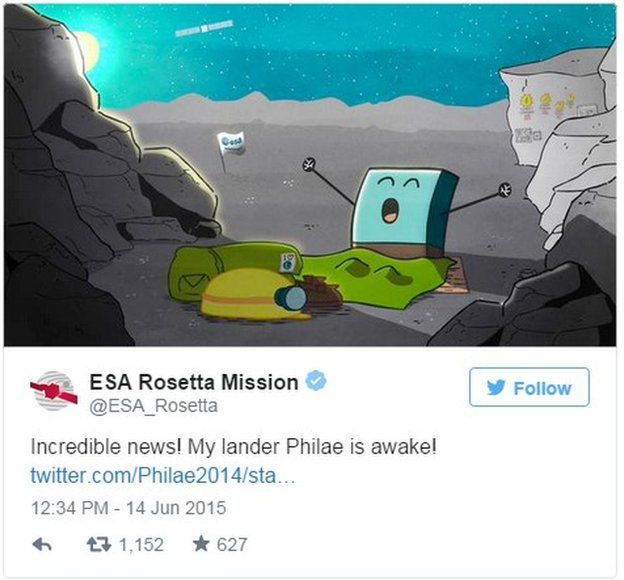
On 14 June, our editors had a nice wake up when they received confirmation that comet lander Philae was back in touch with its orbiter Rosetta. At 22:38 CEST the previous night, signals were received at ESA’s European Space Operations Centre in Darmstadt, Germany. Once all key partners had been informed, and following a briefing to discuss the details of the signal, the news could be announced.

The robotic lander separated from comet-chaser Rosetta before descending onto comet 67P/Churyumov-Gerasimenko on 12 November last year. It operated for 2.5 days as planned before entering a period of hibernation. Prior to this Philae sent back images of its surroundings – a dark location with high walls that limited the amount of sunlight reaching its solar panels.

However, with the comet soon approaching perihelion on 13 August 2015, its closest point to the Sun along its orbit – Philae has received enough sunlight to charge its solar panels and wake up from hibernation. The first contact – in approximately seven months – between the lander and Earth, via Rosetta, lasted 85 seconds. To announce this, the probe’s Twitter account, managed by EJR-Quartz on behalf of DLR tweeted, “Hello Earth! Can you hear me?”

The Rosetta mission was launched in 2004, before the days of social media, so much of the early coverage was through online news and blog entries. Having already maintained ESA’s Rosetta website throughout the mission, EJR-Quartz editors have played a key role in developing and running social media channels for Rosetta and Philae at ESA and DLR since 2013. The Twitter accounts are now some of the most followed in the agencies – Rosetta has more than 339, 000 followers and Philae has over 441, 000. We assist ESA and DLR with web and magazine articles and also support their social media campaigns. With the recent mission extension until September 2016, we are looking forward to continuing to support the mission and communicating the science being done by the comet-chasing duo.

Related resources and links
Websites

Social media channels

Twitter

Facebook

Instagram

Philae communication wins prize at Deutschen Preis für Onlinekommunikation 2015

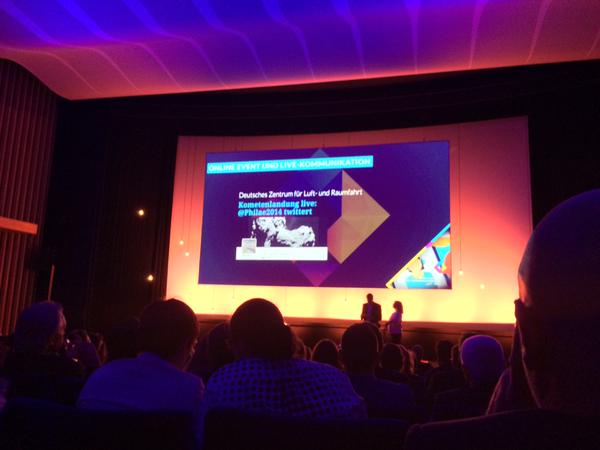
We were happy to be at Deutschen Preis für Onlinekommunikation 2015 (German Prize for Online Communication) this week in Berlin. EQ’s Karin Ranero Celius attended the event on behalf of DLR (Deutsches Zentrum für Luft- und Raumfahrt). The Philae Twitter account for which Karin tweets won an award at the event.

There were 35 award categories, ranging from Online Strategy of the Year and Social Media Presence, to Viral Communication and Blog. Those nominated included digital communication projects and campaigns from high-profile contenders such as Coca Cola, Volkswagen and Dell. DLR won the Deutschen Preis für Onlinekommunikation within the category of Online Event & Live-Communication – honouring those that work on the Philae Lander Twitter account.

As part of our contract with DLR, we are responsible for the DLR English language communication projects, including Philae’s twitter account. Each tweet shares the Rosetta mission from the perspective of the spacecraft’s lander. The account especially gained popularity during the mission’s comet landing event last November. The story of the comet approach and landing unfolded on Twitter, in a dialogue between the Philae Lander and the ESA Rosetta spacecraft.

We are proud to be a part of the exciting comet-chasing mission and look forward to communicating more DLR projects to come.

For more information, visit the event website and keep an eye on @Philae2014 twitter account!


DexROV website now live

This week marked the website launch of one of our newest clients – the exciting EU-funded Horizon 2020 DexROV project. The project brings together seven different international organisations to challenge the possibilities of undersea operations, using space-based technology.

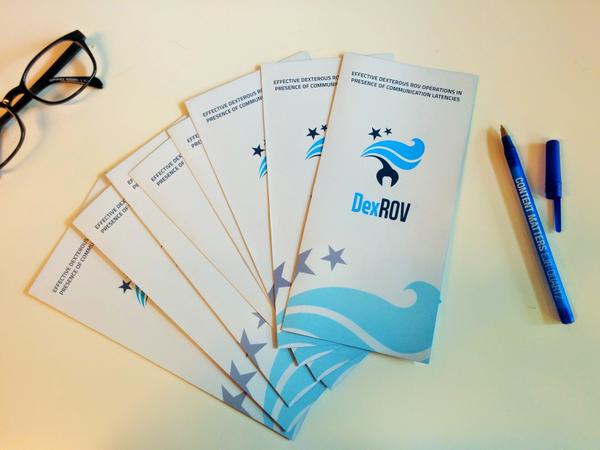
As a partner, our role is to support the DexROV public communication activities, including the recently launched website and social media channels. We became communications partner in January 2015 and visited Marseilles, France for the kick-off meeting in March 2015. As well as digital communication tools, we have designed brochure and poster material illustrating the underwater project. The website launched on 10 June 2015 and provides detailed information on DexROV’s purpose, goals and news.

As part of the long-term Blue Growth strategy to support sustainable growth in the European marine and maritime sectors, DexROV has high aspirations. The project will explore the possibility of operating ROVs from shore, improving underwater robotic dexterity through haptic technology and developing robotic autonomy to compensate for latencies in satellite communications. These developments should improve safe and autonomous access to some of Earth’s most difficult environments.

We are looking forward to seeing what this partnership will bring and are excited to be producing content that will allow its message to be shared with the world.

For more information, visit the DexROV website and Twitter account.


EJR-Quartz has moved office

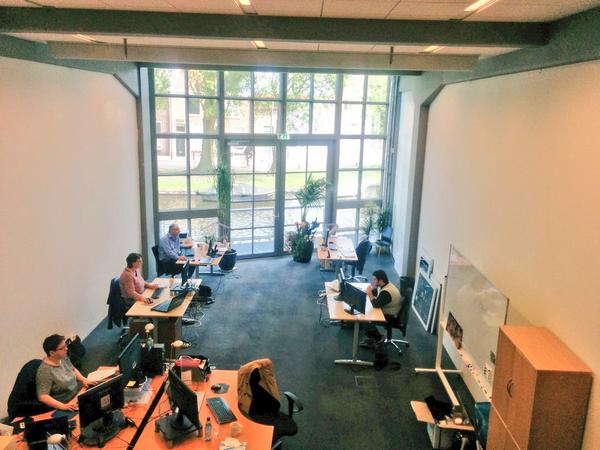
EJR-Quartz’s head office in central Leiden has moved into a spacious, new office within the Nieuw Energie building.

We outgrew our previous workspace and moved into our new premises on Friday 29 May. Normal service resumed on Monday 1 June and we’ve been enjoying getting settled into our new surroundings this past week.

There’s lots of space for creativity in the new office and even a great view of the Mare Singel!

Our new address from 31 May

3e Binnenvestgracht 23-F
2312 NR Leiden
Netherlands

Our contact numbers remain the same

T: +31(0)71 512 4301
F: +31(0)71 512 4450

Related Links


EJR-Quartz at re:publica

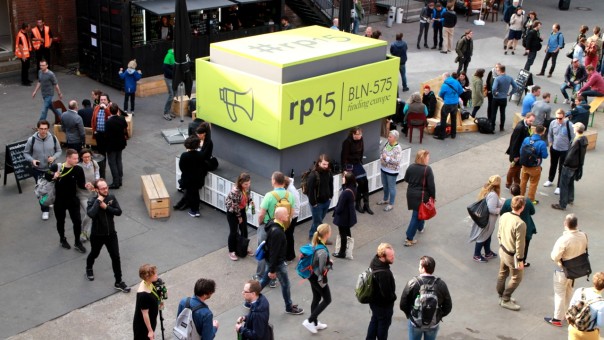
We were excited to be at re:publica, one of the world’s largest and most exciting conferences about digital culture from 6 – 8 May in Berlin, Germany. The conference attracted over 7000 participants, with 50 sessions covering this year’s theme of ‘Finding Europe’ to choose from.

From EJR-Quartz, Emily Baldwin and Karin Ranero Celius attended as speakers. Emily works on the ESA Rosetta Mission social media team, tweeting as the voice of the Rosetta orbiter and Karin works on the DLR Philae lander team and takes on the character of the Philae lander.

The talk, titled Rosetta 1 – Kardashian 0 -: How we (almost) broke the internet took place on Wednesday 6 May. Emily and Karin were interviewed by ESA’s Marco Trovatello, alongside ESA’s Andrea Accomazzo and DLR’s Koen Geurts who provided engineering perspectives to the discussion.

Emily and Karin shared insights into using social media as a tool to communicate the human side of space. They discussed the social media campaign in detail and how this allowed them to provide a human narrative to the tale of two robots. Initiatives such as the #WakeUpRosetta and #AreWeThereYet campaigns were mentioned, which invited public participation with the mission.

Tweeting as Rosetta and Philae, Emily and Karin held conversations between the two accounts, communicating not only the science, but the sense of adventure and emotion the spacecrafts would have felt if they were human.

This digital personification of the comet-chasing spacecraft duo captured the hearts of millions across the world. The spacecraft’s social media accounts continue to inspire as we learn more from Rosetta whilst it orbits the comet and eagerly await the wake up of Philae on the surface.

Watch a replay of the talk online below if you missed it.


EJR-Quartz at EGU General Assembly

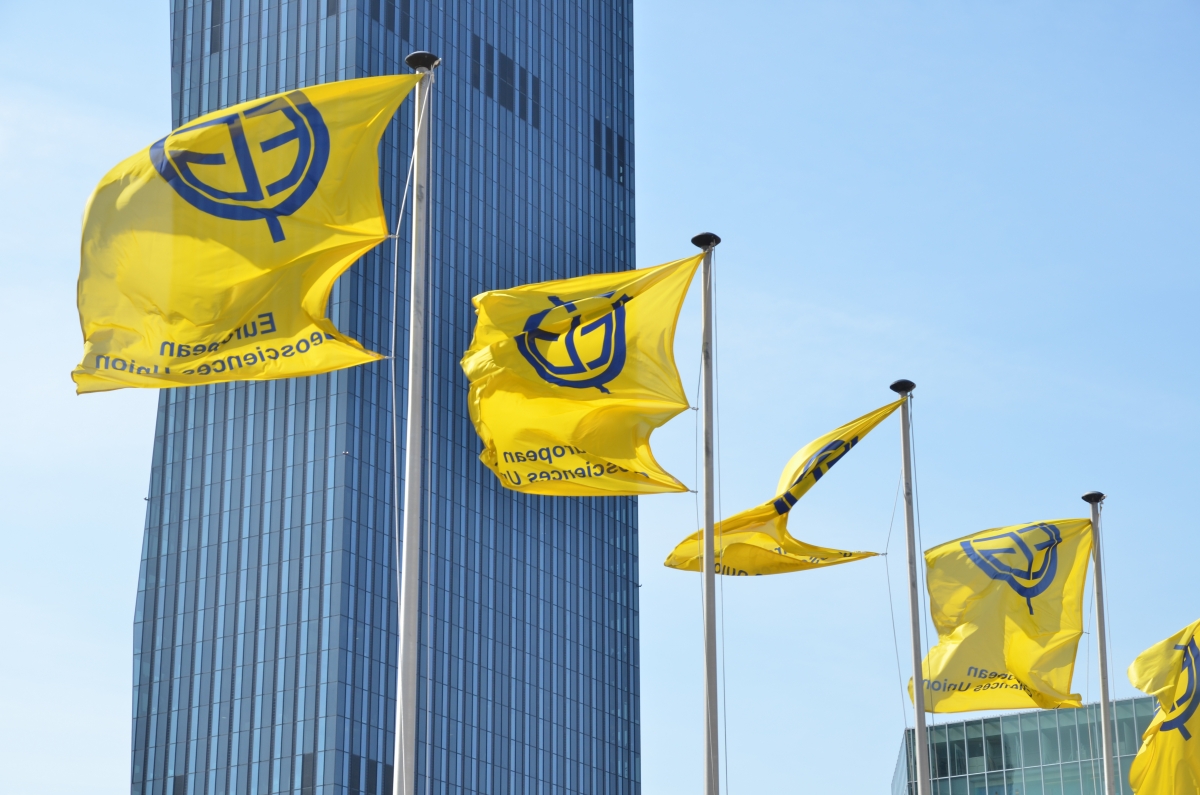
We were happy to be at the European Geosciences Union General Assembly on 12 – 17 April in Vienna, Austria. The conference takes place every year and showcases the latest developments in planetary, Earth and geosciences research. Almost 12 000 scientists gathered from across the globe for the week-long event, which provides a forum for scientists to present their work and discuss ideas.

From EJR-Quartz, Karen O’Flaherty, Emily Baldwin joined the conference to share the work that they do on behalf of the European Space Agency (ESA), and Nikita Marwaha assisted with the running of the Press Centre.

The conference was comprised of scientific sessions and side events such as talks and debates that encouraged collaboration and innovation across disciplines. With plenty of networking opportunities for young scientists and a strong media presence, the conference had an interesting programme and a friendly atmosphere.

Both Karen and Emily presented lessons from ESA’s Rosetta mission in the conference’s outreach session. Karen’s presentation focused on engaging the public through competitions as she discussed lessons learnt from the Rosetta mission’s public competitions. Emily spoke about spacecraft personification through social media, using the Rosetta and Philae twitter accounts run by EQ for ESA and DLR German Aerospace Center as successful examples. Both Emily and Karen also helped maintain the ESA booth, providing information on the science and outreach carried out at ESA.

Nikita worked in the Press Centre where there were a number of Press Conferences taking place – including one from EQ clients ESA and DLR. Here, Rosetta Project Scientist Matthew Taylor (ESA) and Philae Project Manager, Stephan Ulamec (DLR) shared the latest results from the mission alongside Principle Investigators Hans-Ulrich Auster and Karl-Heinz Glassmeier.

The next EGU General Assembly will be held between 17 and 22 April 2016 in Vienna, Austria.


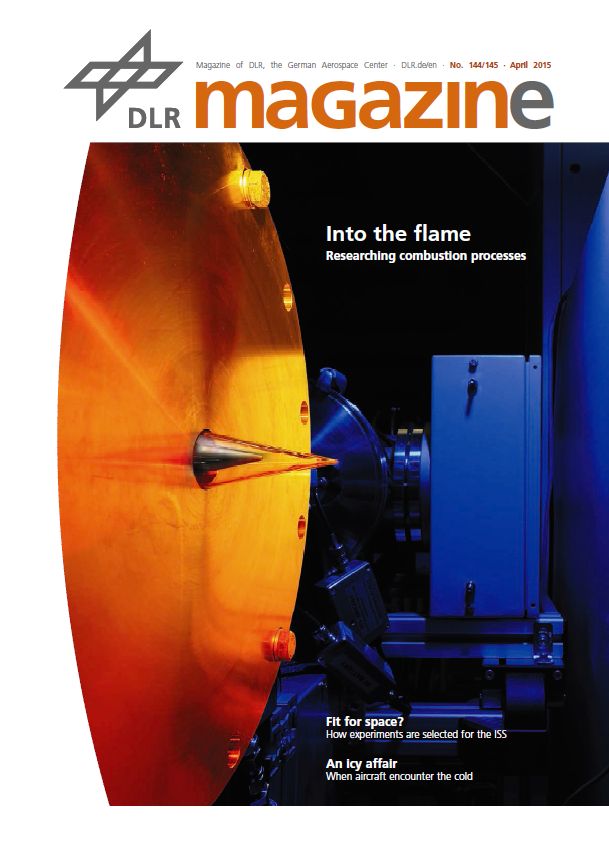
DLR Magazine 144-145 ‘Into the flame’

The latest edition of DLR Magazine, the German Aerospace Center (DLR) flagship publication, is now out. EJR-Quartz is responsible for the English edition of the print publication.

The first DLR Magazine of the year features a diverse selection of articles. ‘Into the flame’ takes a closer look at the topic of energy – in particular, what happens when fuels burn. DLR Magazine 144/145 highlights the extremely sensitive analyses carried out by combustion researchers at DLR using a molecular beam mass spectrometer.

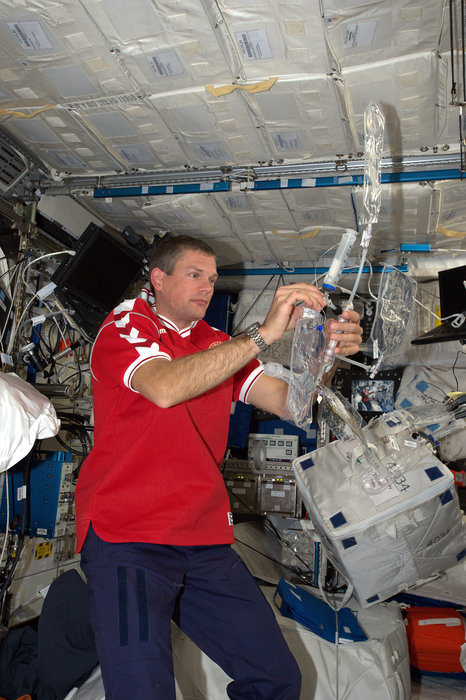
‘Fit for space?’ illustrates the complex process of putting scientific research in space using four examples. Who decides what research will be conducted on the International Space Station (ISS)? What journey do experiments go on before they make it to space?

‘An icy affair’ delves into the problematic issue of aircraft icing and its prevention in future. At high altitudes, supercooled water droplets accumulate on aircraft wings, coating them with ice. DLR researchers are studying this very unusual aircraft icing phenomenon in the heat of Brazil as they look for anti-icing solutions.

You can also read about the latest DLR news, get a glimpse of the human footprint on Earth, as well as learn about how the asteroid lander MASCOT came to be and the search for extrasolar planets with the Next-Generation Transit Survey in Chile.

Read the DLR Magazine online or download it as a PDF file. Receive printed copies of the magazine on your doorstep, free of charge, by completing the subscription form.

Related links